


Now, the underground traffic flow has doubled, the average speed has increased by 10 per cent, and the likelihood of mishaps has diminished significantly.
Around 2018, the Chinese government quietly launched one of the most ambitious environment-engineering plans in human history: it constructed a series of large-scale reservoirs and water pipelines, storing snowmelt and seasonal floods, and transporting them deep into deserts and gobis. The plan aims to transform Xinjiang into an oasis capable of accommodating 200 million people, elevating China’s national strength to a new level.
Thanks to intelligent machines, this century-old aspiration is materialising at an unprecedented speed.

04:12
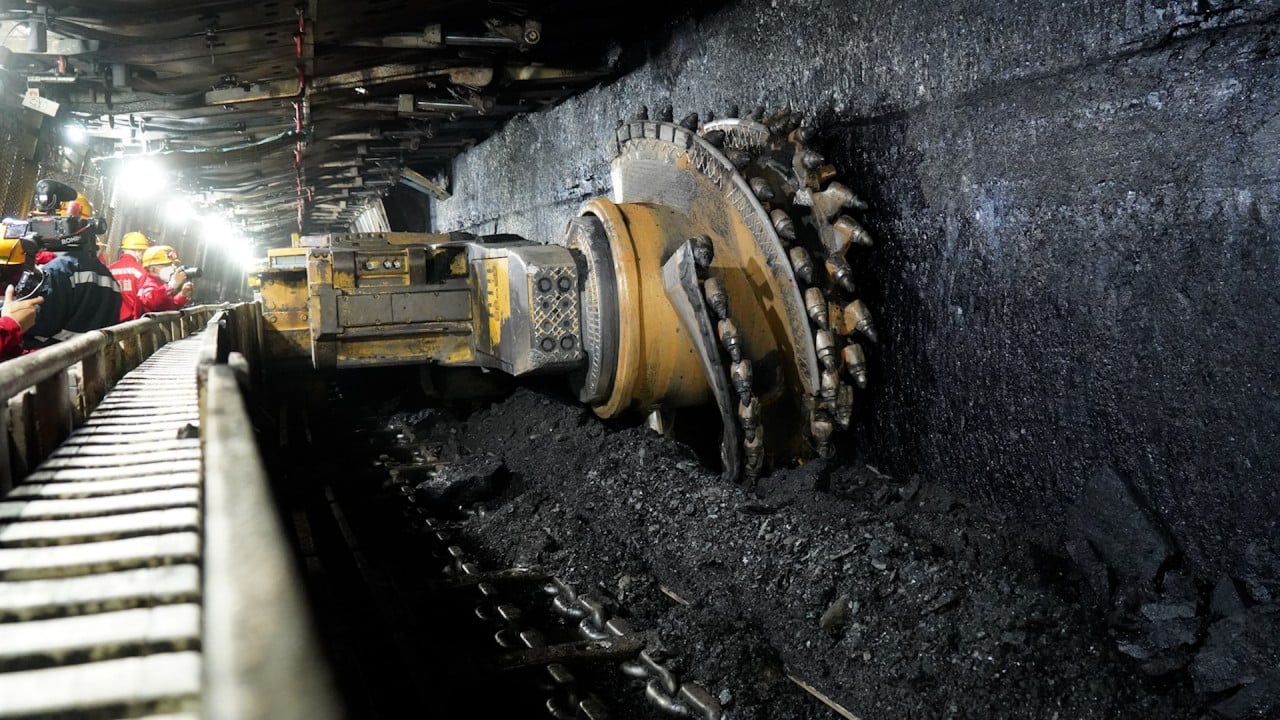
How Huawei’s use of 5G and AI is transforming China’s coal mining industry
How Huawei’s use of 5G and AI is transforming China’s coal mining industry
Back in 1918, Sun Yat-sen, one of modern China’s founders, envisioned establishing the nation’s capital in Yili, a northwest Xinjiang city. His portrait, erected annually in Tiananmen Square during National Day celebrations, faces Chairman Mao Zedong’s across the expanse.
Although Sun lived during a period of extreme weakness for China, he foresaw that China would have the capability to transform Xinjiang into a global political centre. Geographically speaking, Yili stands at the heart of Eurasia, equidistant from Kyiv and Shanghai.
“To seek a continent, look to Yili,” Sun wrote in his book, The Programme of National Reconstruction.
“I believe in its feasibility. Even with the challenges of moving mountains and filling seas, we will eventually succeed,” he said.
In Chinese, the character for seek – or mou – suggests planning, not waging war or conquering territory. The Belt and Road Initiative, for example, has been taken as a kind of grand scheme for the continent with fresh infrastructure including roads, bridges and railways to join up the entire Eurasian landmass.
Last year, a government-funded research team made public a proposal to establish a second capital in Xinjiang. All powerful and prosperous periods in Chinese history had enjoyed two capitals, the proposal argues. As China’s political, economic and military strength gradually returns to its peak, the researchers believe that it is now time to return to this tradition.
Since the 1980s, precipitation in Xinjiang has steadily climbed, with a marked acceleration after 2010, approaching the rainfall witnessed during the Tang dynasty, according to some studies.
Consider, for instance, the excavation of underground water tunnels, where the longest section exceeds 280km. It requires multiple tunnel boring machines to operate simultaneously and the construction of many auxiliary tunnels to facilitate material transport. The transport tools include not only trucks but also rail freight cars.
01:28
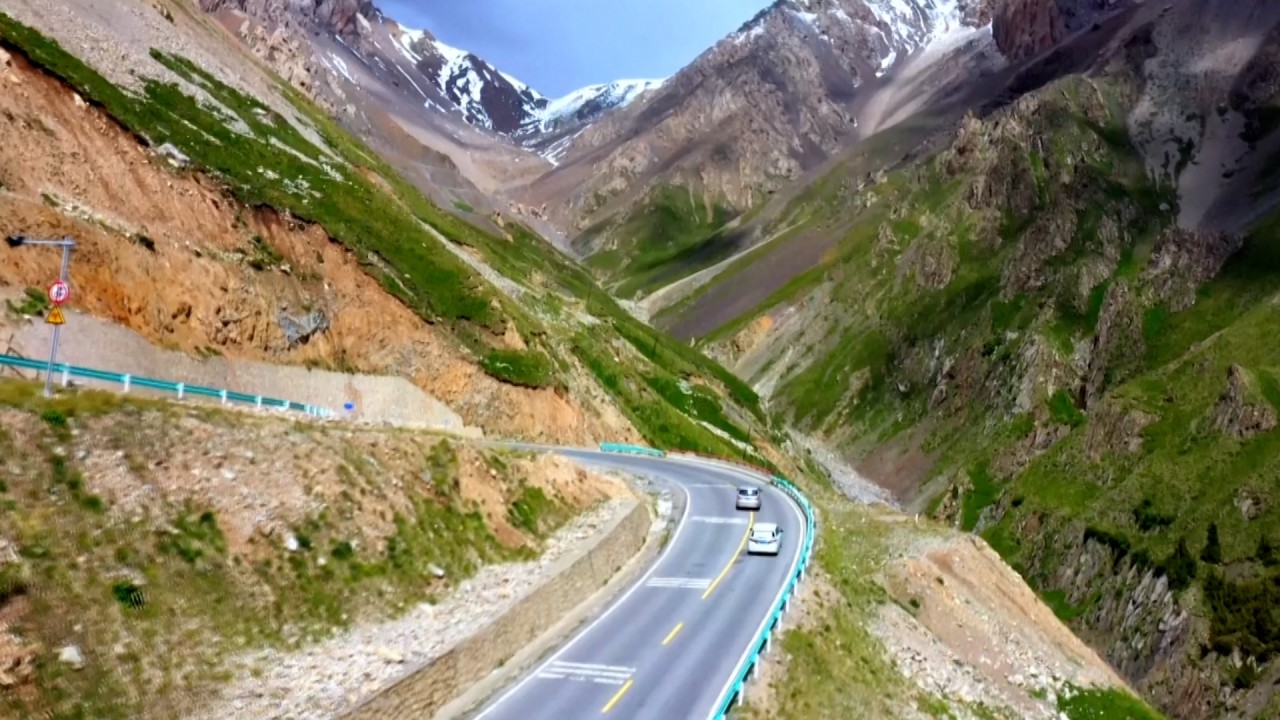
Iconic tourism highway in Xinjiang reopens after 8-month closure
Iconic tourism highway in Xinjiang reopens after 8-month closure
According to Wang’s team, there’s currently no research or application globally addressing intelligent vehicle scheduling and management in such an expansive and intricate underground project.
Using low-cost sensors and communication systems, Wang and his colleagues have built an “intelligent” underground traffic control system that can reliably operate in harsh environments.
From monitoring stations both on the ground and underground, human safety personnel oversee the machines and can swiftly intervene in the case of an emergency.
Throughout a year of rigorous testing and practical application, the smart system has proven its worth, solving world-class engineering obstacles such as “elevated safety hazards during ultra-long tunnel excavations, complex multi-vehicle scheduling and inefficient material transport,” the scientists said.
Many other large-scale water management projects currently under way in Xinjiang also use AI technology to speed up the construction progress.
Take, for example, the Dashixia reservoir project launched in 2020. It involves building a dam with a volume almost eight times that of the Hoover Dam in the United States.
Faced with a tight 2026 deadline for full operation, state-of-the-art technologies like self-driving trucks and unstaffed rollers have been deployed, according to state media reports.
The entire construction process is controlled by AI. Once completed, this dam will become the largest 3D-printed building on Earth.
link