


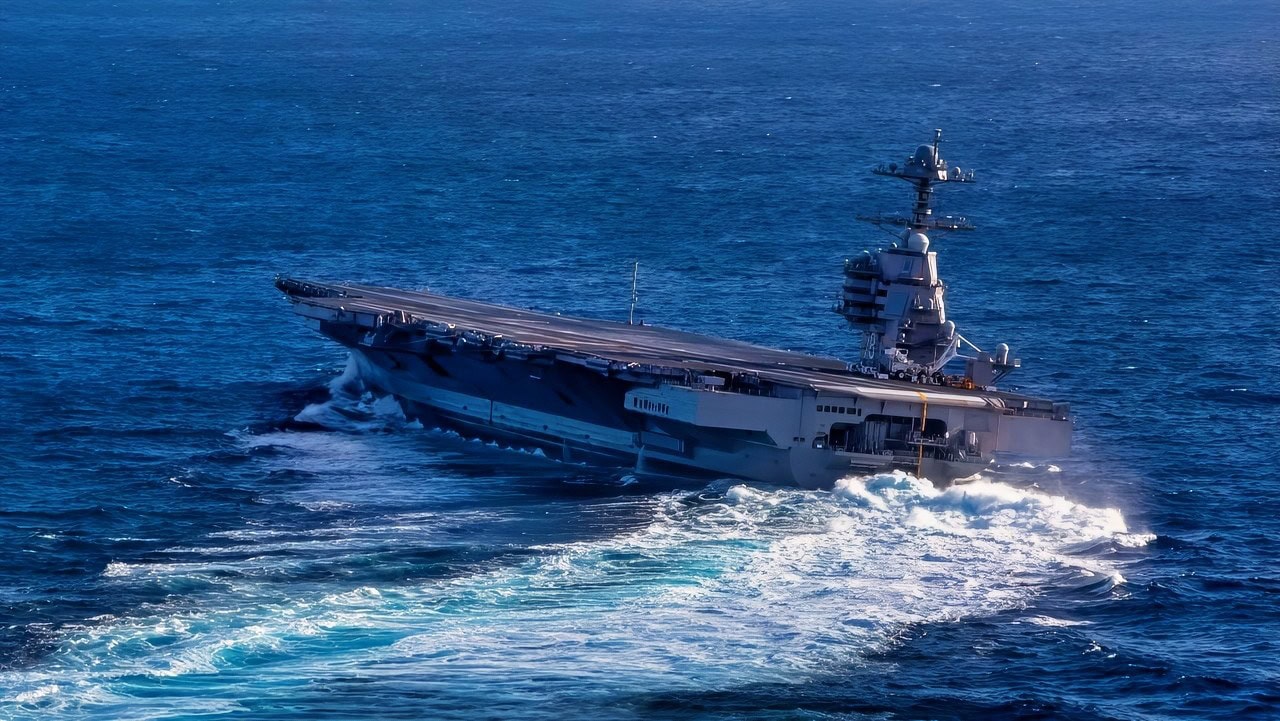
Summary and Key Points: The U.S. Navy aircraft carrier USS Gerald R. Ford is currently transiting to the Middle East after more than 230 days at sea, moving from a mission to capture Nicolas Maduro in Venezuela to a high-readiness posture against Iran.
-By the time the Ford reaches striking distance of Tehran, the deployment could extend to a full year, rivaling the record-breaking durations of the Vietnam War.

-National Institute of Health (NIH) research highlights the severe “psychological cost of war” associated with such prolonged exposure to combat and isolation, raising urgent questions about fleet size and the long-term mental health of the 4,500 sailors on board.
The 300-Day Strain: Why the USS Gerald R. Ford’s 2026 Deployment is Breaking Records
The famous USS Gerald R. Ford (CVN 78) supercarrier is now in the midst of a rapid, threat-driven, high-intensity transition from the perils of maritime warfare off the coast of Venezuela to forward positioning in the Middle East in anticipation of a possible attack on Iran.
This transition is now underway as the USS Ford transits from the Southern Hemisphere to the Middle East with the expectation of arriving within striking distance of Iran within a week.
A deployment of this length could be considered a modern anomaly, as deployments have not been expected to extend beyond six months in recent years.
With deployment extensions already underway in support of the Venezuelan operation, the USS Ford has already been deployed for more than 230 days without returning to its home port of Norfolk, Va.

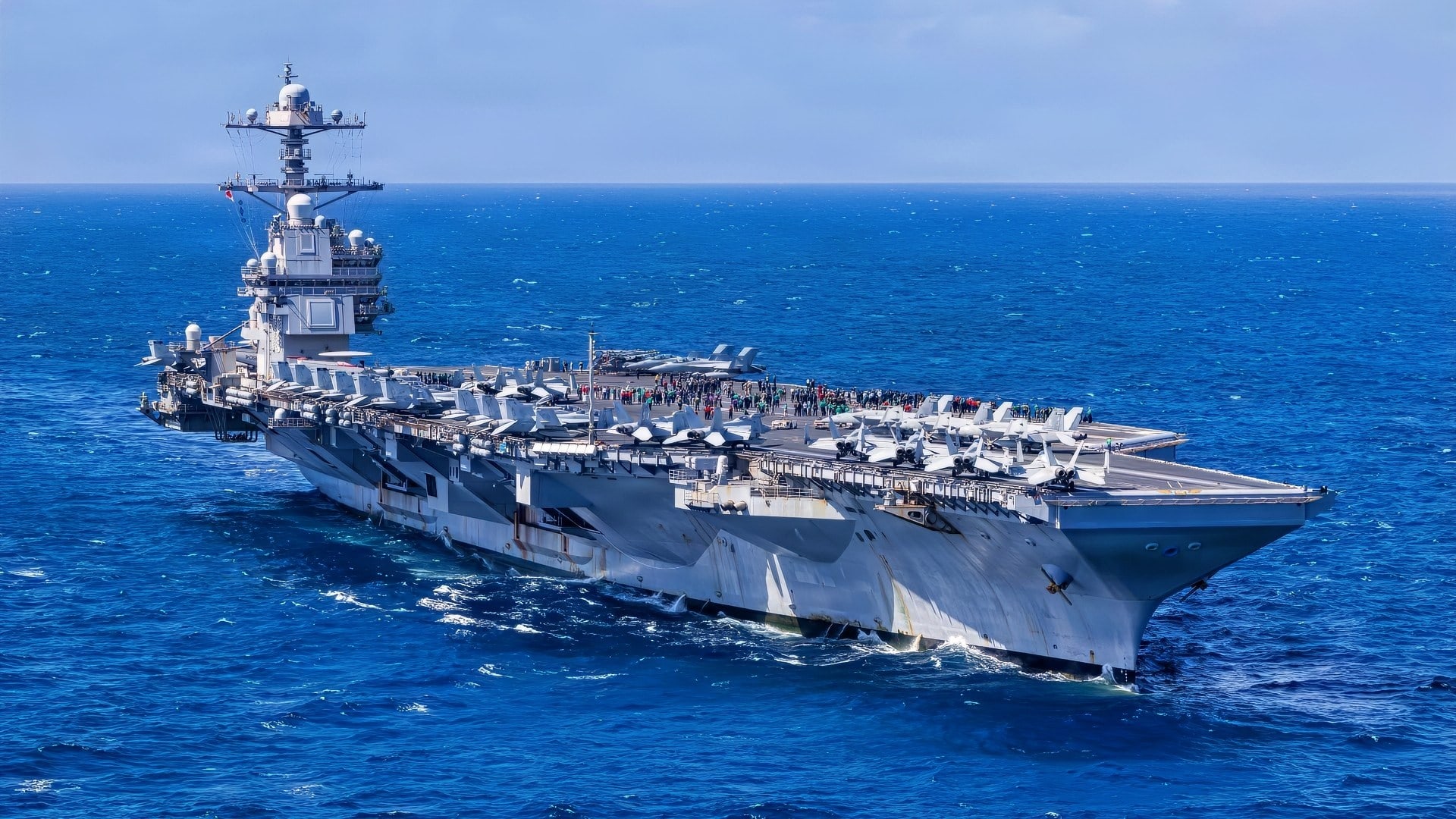
The world’s largest aircraft carrier, Ford-class aircraft carrier USS Gerald R. Ford (CVN 78), transits the Caribbean Sea during Carrier Air Wing 8’s aerial change of command ceremony, Jan. 19, 2026. U.S. military forces are deployed to the Caribbean in support of the U.S. Southern Command mission, Department of War-directed operations, and the president’s priorities to disrupt illicit drug trafficking and protect the homeland. (U.S. Navy photo)
The Middle East deployment could keep the USS Ford at sea for more than 300 days, up to a full year, depending on the timing of its eventual return.
This deployment length rivals that of the Vietnam era, when carriers were deployed for much longer periods than they are today. For instance, in 1964, the Midway-class USS Coral Sea (CVA-43) deployed for 329 days, just short of a record set by the USS Midway in 1972 for 332 days at sea.
The Perils of Extended Deployments for USS Gerald R. Ford and All U.S. Navy Warships
Beyond the clear self-evident reality of being separated from family, friends, loved ones, and the many reassuring elements of a home environment, there is scientific evidence from National Institute of Health research that specifically analyzed the long-term impact of extended deployments upon mental health.
The principal findings, as articulated in an essay from the National Library of Medicine called “Deployment of Personnel to Military Operations: Impact on Mental Health and Social Functioning,” were that indeed there is a substantial, evidence-based finding of a clear correlation between extended military deployments and depression, anxiety, PTSD, and other mental disorders.
This was particularly true when military members were assessed more than 24 months after an extended deployment.
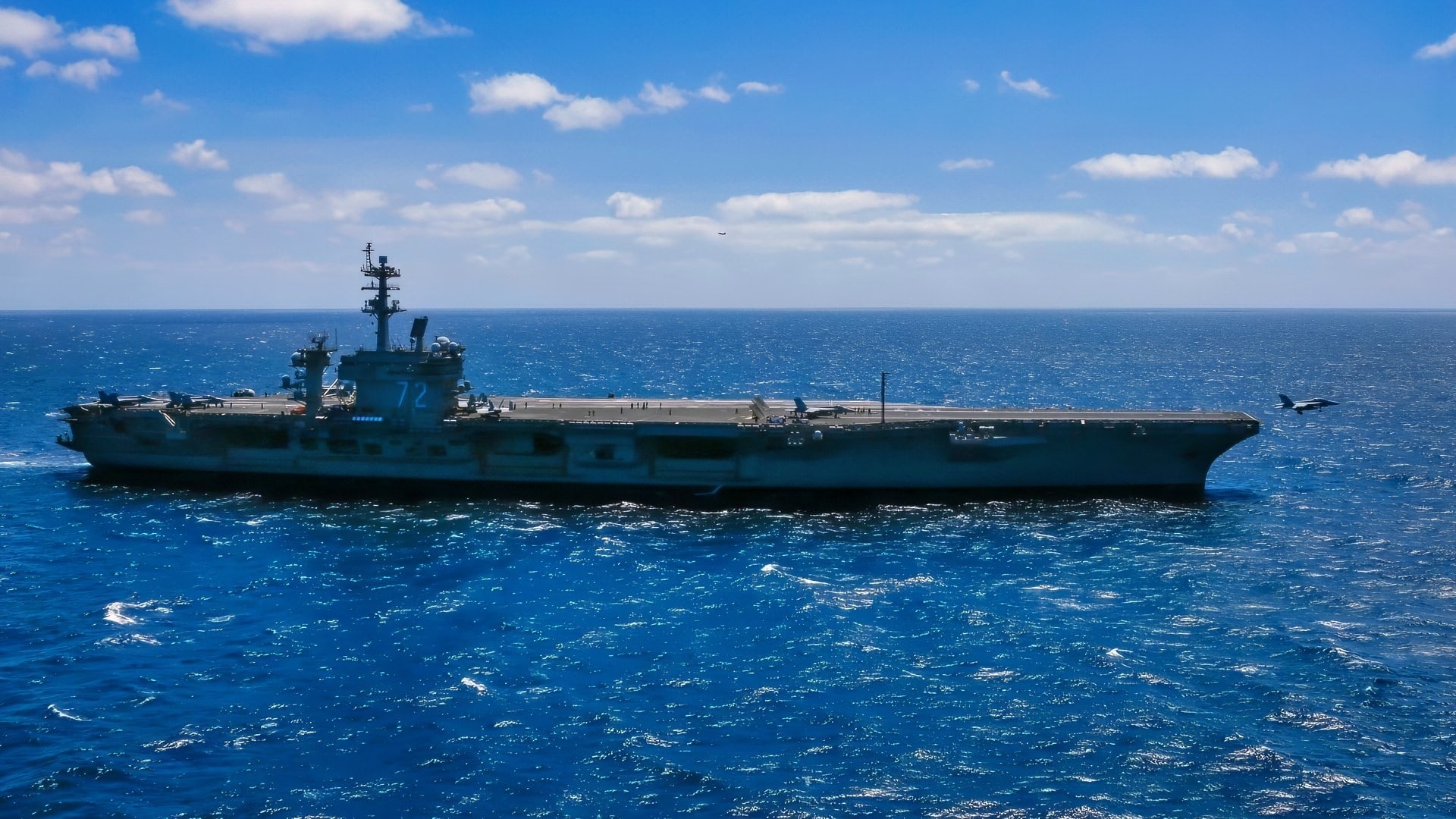
(May 13, 2020) An F/A-18E Super Hornet assigned to the “Flying Eagles” of Strike Fighter Squadron (VFA) 122 launches from the flight deck of the aircraft carrier USS Abraham Lincoln (CVN 72). Abraham Lincoln is underway conducting routine operations in the U.S. 3rd Fleet area of operations. (U.S. Navy photo by Mass Communication Specialist 2nd Class Amber Smalley/Released)
This finding seems to suggest that the mental, emotional, and psychological effects of prolonged military operations can be long-lasting and intensify with the passage of time.
“Deployment to military operations negatively affects the mental health functioning of deployed military personnel. For assessments taken more than 24 months since exposure, we consistently found adverse effects of deployment on all mental health domains (PTSD, depression, substance abuse/dependence, and common mental disorders), particularly on PTSD. For assessments taken less than 24 months (or a variable number of months since exposure), the evidence was less consistent and in many instances inconclusive,” the NIH research paper states.
Aircraft Carrier Being Tested Like No Other: Psychological “Cost of War”
Citing the “psychological cost of war,” the NIH paper draws a parallel between long-term mental health problems and prolonged exposure to the perils of war, such as “increased risk of physical harm and increased risk of adverse shocks to their mental health.
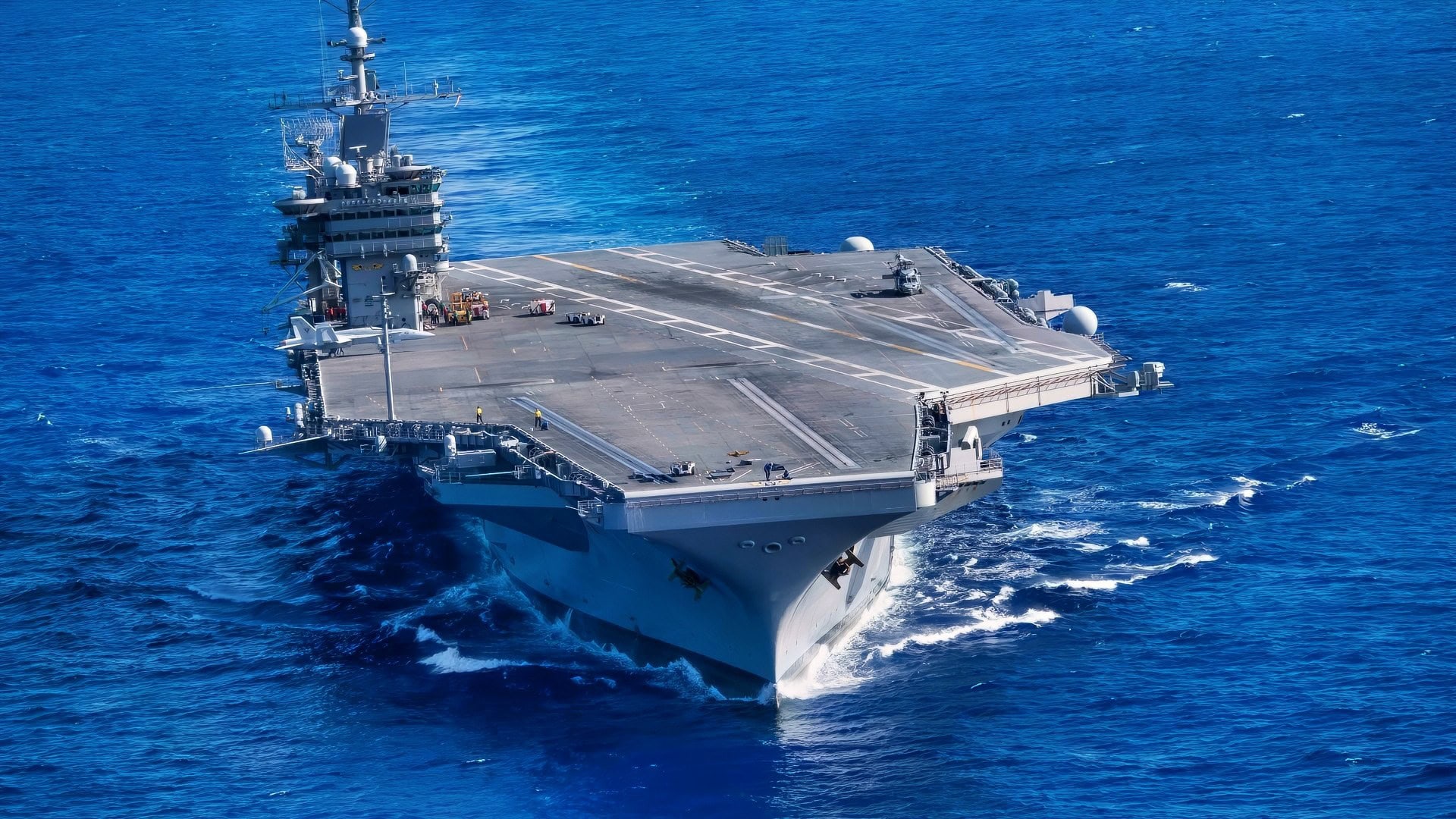
The aircraft carrier USS John C. Stennis (CVN 74) steams through the Atlantic Ocean, Sept. 6, 2019. The John C. Stennis is underway as part of a Commander, U.S. 2nd Fleet ordered sortie ahead of Hurricane Dorian, which is forecasted to bring high winds and heavy rain to the East Coast. Ships are being directed to areas in the Atlantic Ocean where they are best postured for storm avoidance. (U.S. Navy photo by Mass Communication Specialist 3rd Class Grant G. Grady)
“Research suggests that the increased risk to mental health is mainly due to the hazards of war, combat exposure: firing weapons, roadside bombs, seeing fellow soldiers, friends, civilians, and enemies being injured, maimed, or killed. These experiences may lead to severe mental stress. The adverse impact on mental health is the psychological cost of war,” the paper states.
Facing Death
Clearly, crew members of the USS Ford have endured and supported a maritime-warfare operation involving combat sorties over Venezuela in support of the targeted military mission to capture and abduct President Nicolas Maduro.
Pilots of surveillance aircraft, helicopters, and fighter jets confronted the risk of death while flying over Venezuelan air defenses, crew members on the ship supported and performed lethal operations such as firing weapons, loading up aircraft with bombs and guns, and confronting the realities of lethal precision strikes in war.
As articulated in the NIH research, this kind of prolonged “stress” can generate long-term mental health consequences.
Now that the USS Ford is headed to the Middle East, it is entirely feasible that the ship may support a large-scale, prolonged air attack campaign against Iran, without resting or returning home.

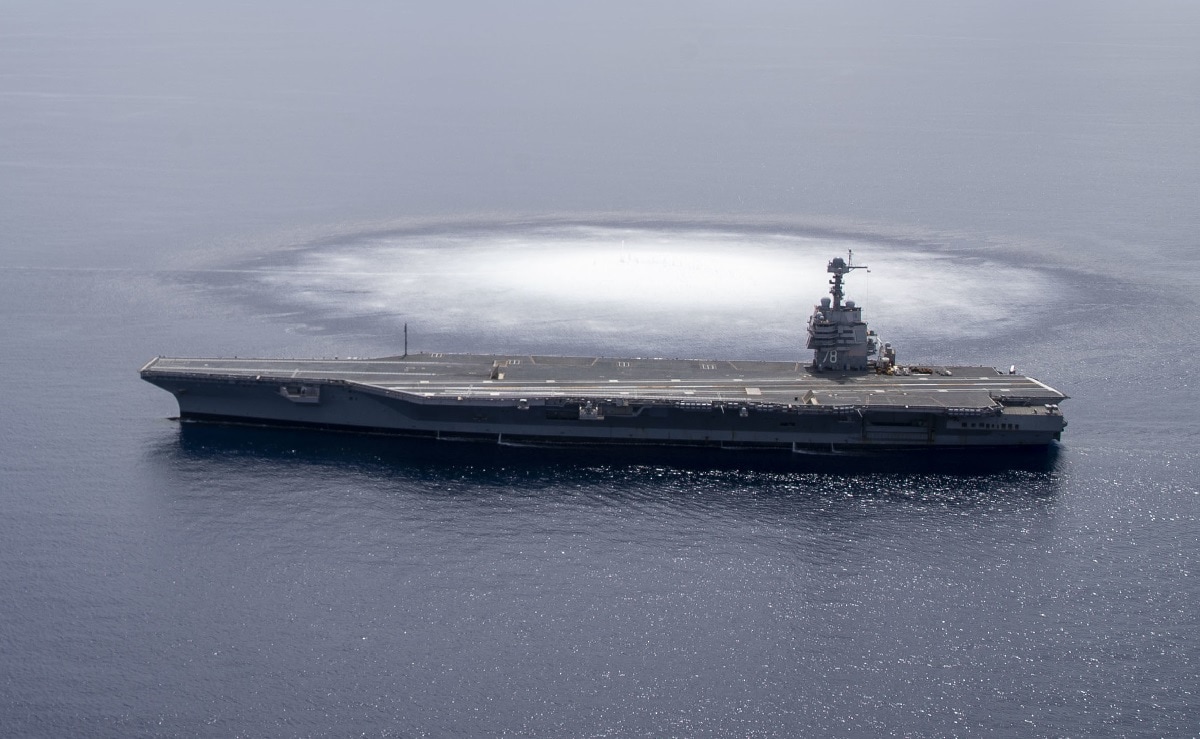
The aircraft carrier USS Gerald R. Ford (CVN 78) completes the first scheduled explosive event of Full Ship Shock Trials while underway in the Atlantic Ocean, June 18, 2021. The U.S. Navy conducts shock trials of new ship designs using live explosives to confirm that our warships can continue to meet demanding mission requirements under harsh conditions they might encounter in battle. (U.S. Navy photo by Mass Communication Specialist 3rd Class Riley B. McDowell)
The crew will therefore need to transition quickly from maritime combat in South America to possible maritime warfare in the Middle East.
This reality bears heavily on the regularly considered question of whether the U.S. Navy does indeed need a larger fleet of aircraft carriers.
The Combatant Commander’s demand for carriers throughout the world greatly exceeds the available supply.
About the Author: Kris Osborn, President of Warrior Maven
Kris Osborn is the President of Warrior Maven – Center for Military Modernization. Osborn previously served at the Pentagon as a highly qualified expert in the Office of the Assistant Secretary of the Army—Acquisition, Logistics & Technology. Osborn has also worked as an anchor and on-air military specialist at national TV networks. He has appeared as a guest military expert on Fox News, MSNBC, The Military Channel, and The History Channel. He also has a Masters Degree in Comparative Literature from Columbia University.
link